
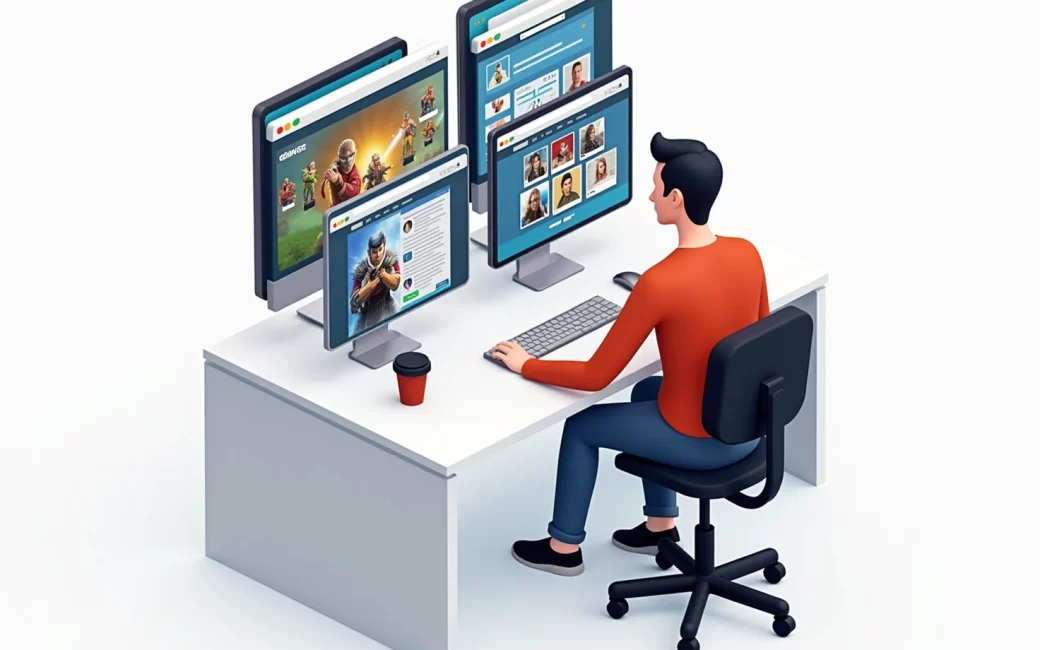
A reader searches 'gaming' and meets two unrelated senses
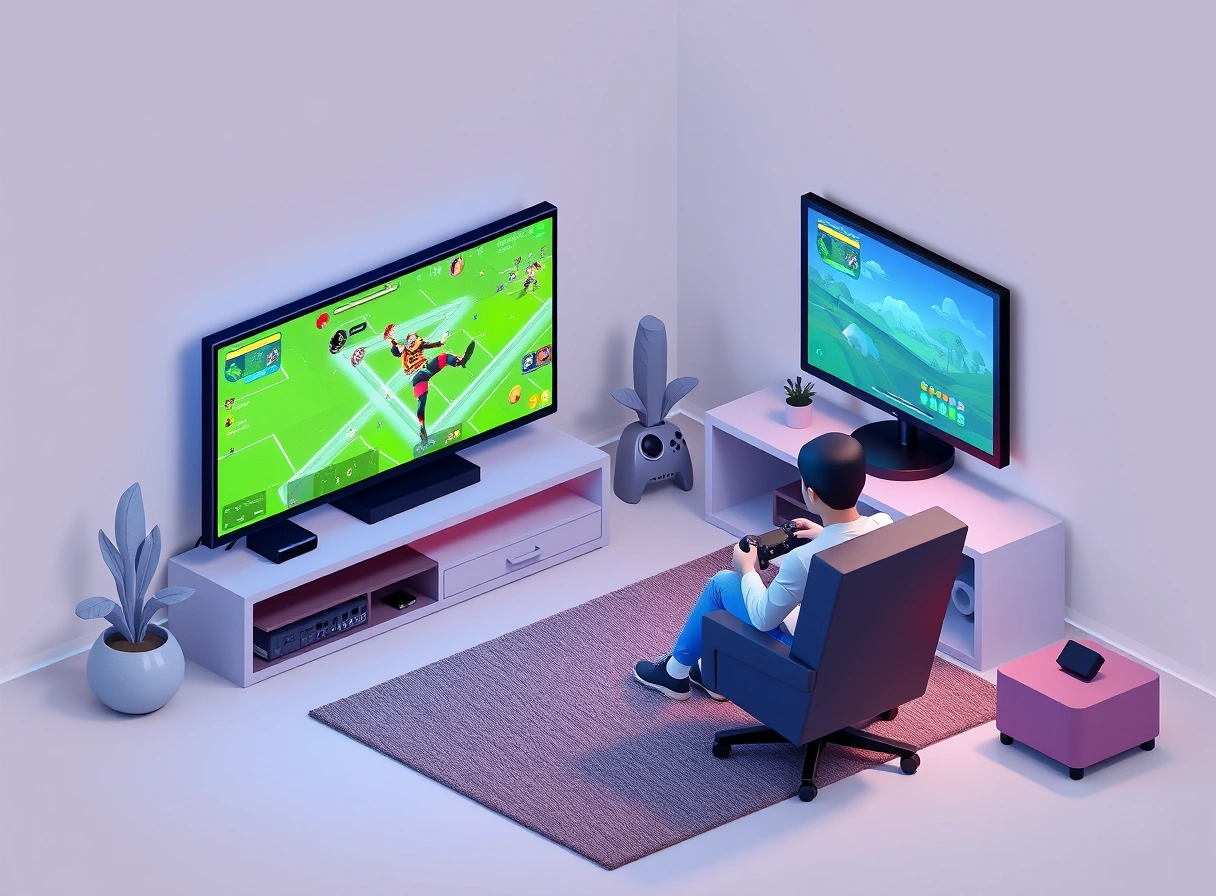
Type "gaming" into a search bar and the results split into two conversations that share nothing but a word. One is about playing video games — consoles, PC builds, new releases, communities built around them. The other is the legal and industry term for gambling, used in state statutes, casino licensing boards, and regulatory filings.
The confusion is genuine, not a quirk of any one site. A headline about "gaming revenue" in a state budget report is almost certainly about casinos and lottery receipts, while a headline about "gaming news" on a hobbyist site is about game releases and patches. Knowing which sense a source intends before reading further saves a wasted click, and the tell is usually the noun sitting next to it: "gaming commission" and "gaming license" belong to gambling; "gaming console," "gaming PC," and "gaming community" belong to video games.
A player wants to play a specific title
Wanting to play a specific game means choosing the platform it runs on, and that choice is really a hardware-versus-connection decision. A title tied to a console — a Nintendo Switch, an Xbox, a PlayStation — requires owning or buying that box. A title built for PC gaming requires a machine that meets its listed specs, which vary far more between games than console requirements do.
Cloud gaming sidesteps the purchase entirely by running the game on a remote server and streaming the video back, so the local hardware barely matters. What replaces it is the network: cloud gaming trades an upfront hardware cost for an ongoing requirement of stable, low-latency broadband, since the video and input signal have to make a round trip fast enough that delay isn't noticeable. A player who already owns a capable PC or console gains nothing from cloud streaming's convenience; a player without either gains a way in, provided their connection can carry it.
A title is announced with a release date and sometimes a limited edition
An announcement gives you a release date and, often, a limited edition to preorder — neither of which tells you whether the game is any good. Pre-release coverage runs on trailers, developer interviews, and marketing beats, all of which build anticipation without offering verified quality; a title like Blood Dawnwalker is a case in point, since everything published about it before launch is necessarily speculative.
Actual quality evidence arrives with reviews published at or after release, once critics have had time with a finished build. That timing gap creates two different bets: preordering a limited edition locks in bonus content and a release-day copy against the risk that the game underperforms, while waiting for reviews trades that bonus content for certainty. Neither choice is wrong — they're just different trades, and knowing which stage of coverage you're reading tells you which one you're making.
Long uninterrupted sessions are the mechanism behind most claimed harms of gaming
Most of what gets blamed on gaming as an activity traces back to how long a single session runs and what it displaces, not to gaming itself. Skipped meals, disrupted sleep, and reduced physical activity are consequences of hours spent uninterrupted, and those same consequences show up around other absorbing, low-movement activities that have nothing to do with games.
That reframes the question from "is gaming healthy" — which has no single answer — to something a player can actually act on: session length, built-in breaks, and whether play is crowding out sleep or movement. Managing those three addresses the mechanism directly, rather than treating the game itself as the variable to fix.
Video game
A video game is the object all of this circles back to — the software a console, PC, or cloud service runs, and the thing every platform, review, and community exists to serve. Everything from hardware choice to release timing to session management is downstream of a specific title someone wants to play.
Gaming console
A console is dedicated hardware built to run games and little else, which is its trade-off against a PC: less flexibility, but a fixed, known set of requirements. Because a console's specs are uniform, a game either runs on it or it doesn't — there's no settings menu to negotiate, unlike PC gaming where performance scales with the machine.
Nintendo Switch
The Nintendo Switch is built around switching between a dock connected to a television and handheld play away from it, which is the feature that separates it from a fixed home console. That dual mode is also why its game library and performance targets differ from stationary consoles — titles are built to run in both configurations, not just one.
Xbox
Xbox is Microsoft's console family, and its distinguishing feature relative to Nintendo's hardware is closer overlap with PC gaming: shared storefronts, cross-play with Windows, and subscription access that spans both. That overlap makes the platform choice between Xbox and PC gaming less binary than the choice between Xbox and a Nintendo Switch.
PlayStation
PlayStation is the third major console platform alongside Nintendo Switch and Xbox, and any comparison of consoles that leaves it out is incomplete by definition — it's not a niche alternative but one of the three the choice usually comes down to. Its distinguishing pitch has historically been exclusive titles unavailable on the other two, which is the main factor that pulls a buyer toward it over Xbox specifically.
PC gaming
PC gaming means running games on a general-purpose computer rather than dedicated hardware, and the defining trade is flexibility against consistency. A PC can be upgraded piece by piece and typically offers a wider range of graphics and control settings than a console, but that same flexibility means a game's performance depends on the specific machine running it, not a fixed baseline.
Cloud gaming
Cloud gaming runs the game on a remote server and streams the result to whatever screen the player is using, which is what lets it work on hardware too modest to run the game locally. The prerequisite it shifts onto the player is network quality — a stable connection with low enough latency that input and video don't visibly lag — which is a different requirement to check than the hardware specs a console or PC purchase demands.
What are the top 10 gaming websites?
There's no single authoritative top-10, but the useful way to build one is by category rather than ranking: a browser-based portal, a PC storefront, a general reference, and a streaming-platform tracker each answer a different need. The List of video game websites on Wikipedia is the broadest reference point, grouping sites by type — news, reviews, wikis, storefronts — rather than by popularity, which is a more durable way to navigate the space than any single ranked list.
For browser games without an install step, sites like CrazyGames run titles directly in a browser tab. For PC games sold DRM-free, GOG.com is built around that specific model rather than a subscription or launcher requirement. Community-driven rankings also exist informally — a Disqus blog post inviting readers to vote on the best gaming websites is one example of how those lists get crowdsourced rather than settled by any single authority. And for anyone tracking where game streaming actually happens rather than where games are bought or played, Escharts' platform data breaks down the live-streaming side of the landscape separately from the storefronts and portals above.
Start from what you actually want — a specific title, a browser game to fill ten minutes, a DRM-free library, or a place to watch streams — and let that need pick the category before you pick a site within it.